
Buy Solana Online: Cards, Bank Transfer, Apple & Google Pay
Verified accounts, fees shown before you confirm, and 24/7 multilingual support. Payment methods vary by country.Trusted since 2013
Global coverage
24/7 personal support
How to buy Solana in 4 steps
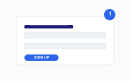
free account Sign up with your email address.
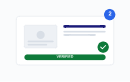
identity Complete identity verification per
global AML standards.
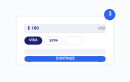
payment method Pay with credit/debit card, bank transfer, Apple Pay or Google Pay.
in your wallet Solana is delivered to the wallet address you provide.
Payment methods
Choose the method that fits your country and speed needs.

Credit card
Card payment, fast

Debit card
Card payment, fast

Bank transfer
1-3 business days

SEPA
EU bank transfer

Apple Pay
Mobile wallet

Google Pay
Mobile wallet
Security & trust

2FA mandatory
Two-factor authentication for every account.

Anti-fraud team
Real humans monitoring transactions 24/7.

AML compliance
Operates under strict AML/KYC standards.

SSL + Cloudflare
Encryption with global edge protection.

Operating since 2013
Continuous service for over a decade.
What is Solana (SOL)?
Solana (SOL) is a public layer-1 blockchain launched in 2020 and designed for high transaction throughput and low network fees. Solana combines a proof-of-stake consensus with Proof of History, a method of timestamping transactions that helps validators agree on order quickly. SOL is the network’s native token, used to pay transaction fees, stake with validators, and interact with Solana applications.
Solana was built for high transaction throughput and low network fees. Its design brings together parallel execution, Rust-based programs, and a shared token standard. Here is how the network works, what SOL actually does on it, and the risks worth weighing before you buy.

Solana at a glance
- TickerSOL
- TypePublic layer-1 blockchain
- Launched2020
- ConsensusProof of Stake (with Proof of History)
- Created byAnatoly Yakovenko, Raj Gokal
- Token standardSPL
- Supply modelInflation schedule set to decline
How the Solana network works
- Anatoly Yakovenko published the Proof of History concept in a 2017 whitepaper and built the network with co-founder Raj Gokal through Solana Labs.
- Proof of History timestamps transactions so validators can agree on their order quickly, working alongside Solana’s proof-of-stake consensus.
- The Sealevel runtime processes non-overlapping transactions in parallel rather than one at a time.
- Developers write Solana programs mainly in Rust, and tokens issued on the network follow the SPL token standard.
- Because SPL is a shared standard, wallets, decentralized exchanges, payment apps and NFT marketplaces can all handle Solana tokens through the same interfaces.
What SOL is used for
- Users spend small amounts of SOL as fees for each transaction they send on the Solana network.
- Holders can stake SOL with a validator to help secure the chain, subject to a waiting period when they unstake.
- Interacting with Solana applications still requires SOL, because the transaction fees those actions generate are paid in SOL.
- New SOL enters circulation on an inflation schedule that is designed to decline over time.
- The Solana Foundation, a nonprofit based in Switzerland, funds development and grants across the ecosystem.
Risks to know before you buy SOL
- Solana has suffered outages and periods of degraded performance that halted or slowed transactions on the network.
- Those halts came during periods of extreme transaction load and software bugs, and required validators to coordinate restarts.
- Developers have shipped fee-market and client changes to reduce that risk, but Solana’s uptime record remains a real consideration.
- Running a validator demands powerful hardware, which critics say concentrates block production among well-resourced operators.
- SOL is a volatile asset whose value can fall sharply; Solana is not a savings product, and nothing here is investment advice.
How do I buy Solana (SOL)?
You can buy Solana on Coinmama with a credit card, debit card, Apple Pay, Google Pay, or a bank transfer over SEPA or SWIFT, and the methods available to you depend on where you live. Coinmama has operated since 2013 and is non-custodial for purchases: after your payment clears, your SOL goes straight to the Solana wallet address you provide. Support is available 24/7 if anything looks wrong.
Solana is one of many cryptocurrencies listed on Coinmama. If you want to read about other networks, Bitcoin and Ethereum are the two oldest networks of this group, Tether is a dollar-pegged stablecoin that carries its own depeg and issuer risk, TRON is often used for low-cost stablecoin transfers, and Uniswap is an Ethereum-based DeFi token. Which coins you can buy depends on Coinmama’s current listings and your country.