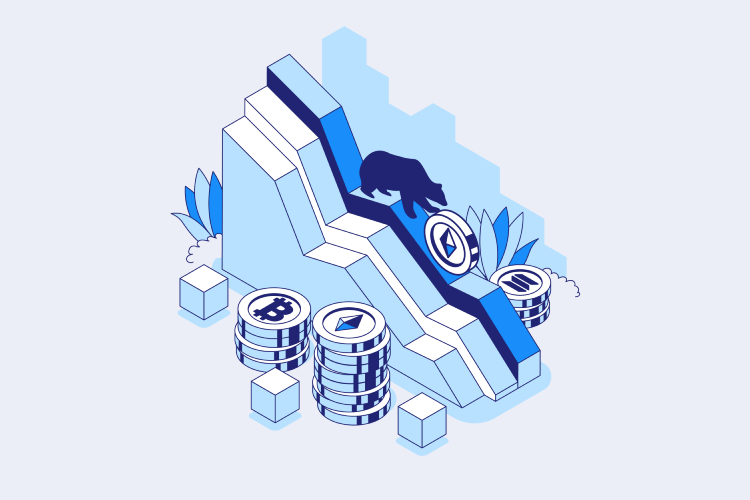
Capitulation is a burst of heavy, panicked selling in which many holders give up at once, driving prices down sharply on very high volume. For buyers, it matters because selling in a panic can lock in losses, and nobody can reliably tell at the time whether a sell-off is over.
What does capitulation look like?
Capitulation, also called panic selling, usually shows three signs at once:
- A steep fall. Prices drop sharply within hours or days.
- A volume spike. Far more coins change hands than usual.
- Extreme fear. Gauges such as the crypto fear and greed index hit their lowest band.
It differs from miner capitulation, when Bitcoin miners sell coins and switch off machines because mining stops paying.
What is an example of capitulation?
On 12 March 2020, the day after the World Health Organization described COVID-19 as a pandemic, bitcoin’s daily closing price fell about 37%, from about $7,900 to about $5,000. Reported spot trading volume was more than three times the day before (Coin Metrics data, as of September 2026). The Crypto Fear and Greed Index fell to 8 by 14 March (alternative.me, as of September 2026).
Extreme fear is not a floor. The index hit 6 on 18 June 2022, yet bitcoin’s daily closing price was lower again that September and November (same sources).
Past performance does not predict future results.
How is capitulation different from a correction or a bear market?
Capitulation is a short burst of panic. A correction and a bear market describe how far prices have fallen.
| Term | What it describes | Common yardstick |
|---|---|---|
| Capitulation | A short burst of panic selling | No fixed size; judged by speed, volume and mood |
| Correction | A reversal from a recent high | A move of at least 10% |
| Bear market | Prices that fall and keep falling | A fall of 20% or more in a broad market index |
Why does capitulation matter when you buy crypto?
Because selling in a panic can lock in losses, and nobody can reliably call the bottom. Crypto prices are volatile, and fear spreads fast through FUD.
A written plan, or buying a fixed amount on a schedule (dollar-cost averaging), can reduce rushed decisions. Neither removes the risk of loss. In a fast market, check the current bitcoin price yourself.
Go deeper: is bitcoin safe to buy?